Source Sleep Support Multivitamin Transdermal Patch for Insomnia, Jet Lag, Stress Relief
Find 30 sleep support multivitamin transdermal patch options from verified manufacturers in Hebei, China. Compare features like lavender or vitamin C ingredients, customizable sizes, and MOQs ranging from 100 to 1000 boxes for personal or daily life use.
Key considerations
Products List




Comprehensive Sourcing Guide
Strategic Sourcing Guide for Sleep Support Multivitamin Transdermal Patches
Understanding Product Definitions and Functional Claims
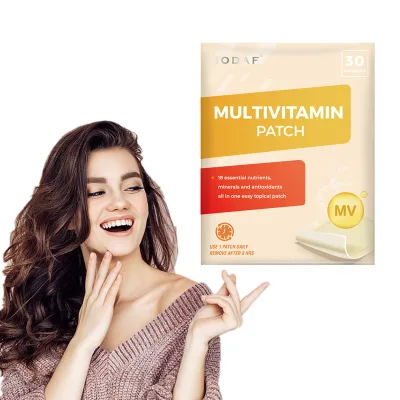
The core keyword "sleep support multivitamin transdermal patch" describes a specific category of wellness products designed to deliver active ingredients through the skin to aid in rest and recovery. In the current B2B marketplace, these items are frequently categorized under herbal extracts or specialized health care solutions. Buyers must recognize that product listings often present a spectrum of formulations. Some entries explicitly identify the primary active component as Vitamin C, while others highlight Lavender or Melatonin as the key ingredient. This variation suggests that the term "multivitamin" in a search context may broadly encompass patches containing various vitamins, herbal extracts, or specific sleep-inducing compounds rather than a single standardized multivitamin complex.
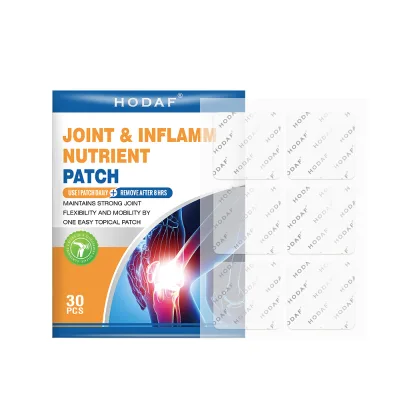
The functional claims associated with these products are diverse. Observations from available market data indicate that these patches are marketed for "Immune Boosters Supports," "Health Care," and specific "Sleep Aid" applications. The intended usage ranges from "Personal usage" to "Daily Life Sleep" assistance. When evaluating a potential supplier, it is critical to distinguish between a patch designed for general wellness and one specifically engineered for sleep improvement. The application area is consistently listed as the "Body," with specific focus on "Improving Sleep." Buyers should verify that the product's stated function aligns precisely with their target market's needs, as the distinction between a general health patch and a dedicated sleep aid patch can impact regulatory classification and consumer expectations.
Technical Specifications and Formulation Variations
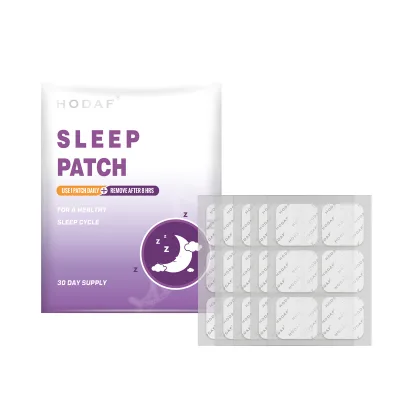
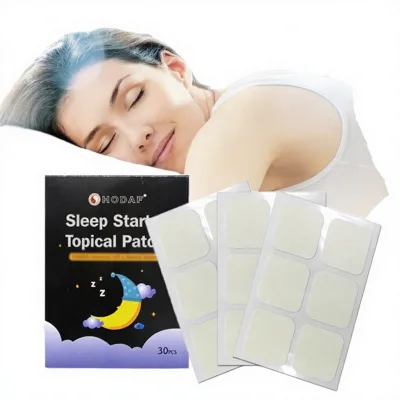
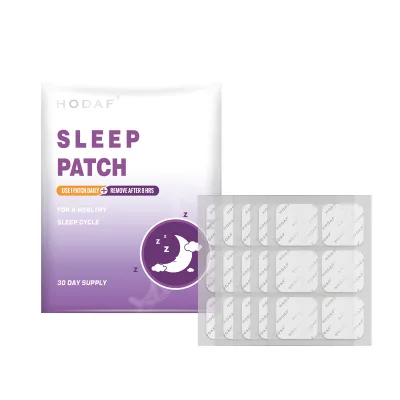
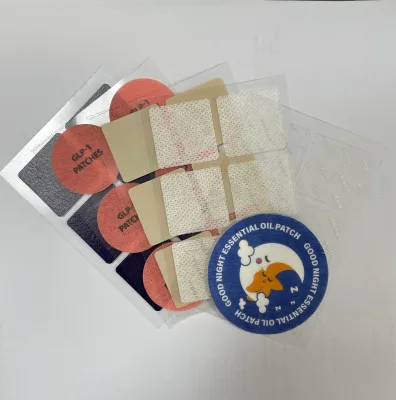
Technical specifications for sleep support patches vary significantly based on the manufacturer's formulation and intended delivery mechanism. The physical dimensions of these products are a primary consideration for logistics and user experience. Available data points show a range of sizes, with specific models listed at 7.5*11 cm, while others offer "Customized Size" options. The single package size also fluctuates, with recorded measurements of 11X7.5X0.1 cm and 12X8X2 cm. These dimensional differences suggest variations in the backing material thickness or the inclusion of additional packaging layers.
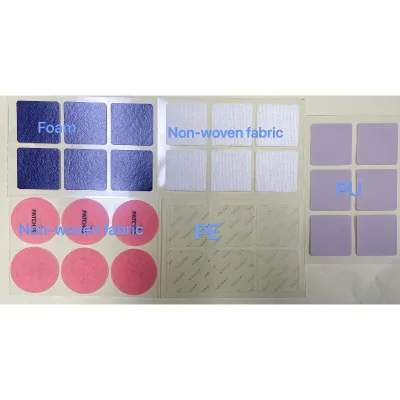
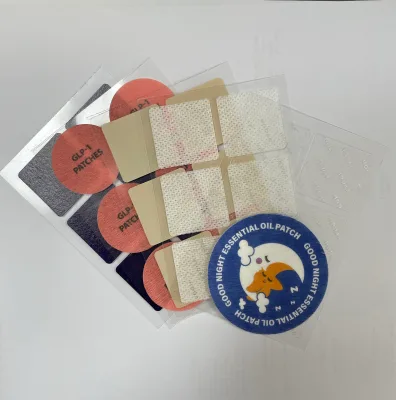
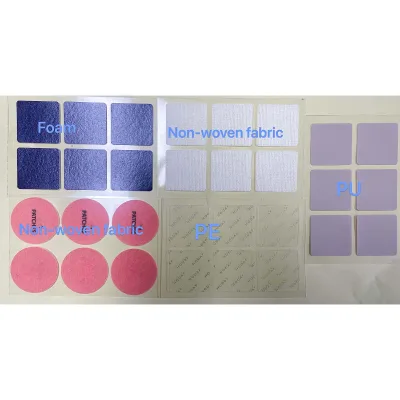
The material composition is another critical technical factor. The base material is frequently identified as "Non-woven fabric," which provides breathability and adhesion properties suitable for skin contact. However, the active ingredient layer varies. While some listings specify "Melatonin" as the material, others list "Lavender" or "Vitamin C" as the main ingredient. This indicates that the "multivitamin" aspect may be a marketing descriptor for a blend of ingredients rather than a strict chemical definition. The shape of the patch is also customizable, with options for "Customize Available" shapes, allowing for branding differentiation.
Weight is a minor but relevant specification for shipping calculations. The single gross weight ranges from 0.002 kg to 0.030 kg depending on the specific model and packaging density. The product form is consistently identified as a "Patch," and the type is often classified as a "Herbal Extract." Buyers must ensure that the technical data sheet provided by a supplier matches the physical attributes required for their distribution channel, particularly regarding the thickness and adhesive properties of the non-woven fabric.
Compliance, Certification, and Regulatory Standards
Navigating the compliance landscape for transdermal sleep patches requires careful verification of quality certifications and manufacturing standards. In the observed market data, certain products list "ISO" and "CE" as their quality certifications. These designations are significant indicators of a manufacturer's adherence to international management systems and safety standards. However, the presence of these certifications in a product listing does not guarantee that every batch or every SKU from that supplier holds the same status. Buyers must request valid, current certificates for the specific product model they intend to purchase.
The shelf life of these products is another compliance-related attribute that varies by formulation. Observed data indicates shelf lives of 2 years and 3 years. This discrepancy often correlates with the stability of the active ingredients, such as Melatonin versus herbal extracts. Regulatory bodies in different regions may have specific requirements regarding the labeling of shelf life and storage conditions. Furthermore, the "prod_standard" for some models is noted as 0.25KG, which may refer to a batch weight standard or a specific internal quality metric rather than a regulatory standard. Buyers should not assume that a listed standard is a universal regulatory requirement but rather a manufacturer's internal benchmark.
It is essential to verify that the "Non-toxic, healthy" and "Eco-friendly" features claimed by suppliers are backed by laboratory test results. While these are listed as product features, they represent performance claims that require validation. The "Place of Origin" for many of these products is Hebei, China, a region known for manufacturing these types of wellness items. Buyers should be aware that regulatory compliance in the destination market (e.g., FDA in the US, EU regulations in Europe) may require additional testing beyond the supplier's provided certifications.
Cost Drivers and Minimum Order Quantity Analysis
The economic structure of sourcing sleep support patches is influenced by several key drivers, including customization, packaging, and order volume. The observed Minimum Order Quantity (MOQ) ranges widely, from 100 pieces to 1000 boxes. This variance suggests that suppliers offer different tiers of engagement. A lower MOQ of 100 pieces might be available for standard, off-the-shelf products, while a higher MOQ of 1000 boxes is typical for customized orders involving specific branding, unique shapes, or tailored ingredient blends.
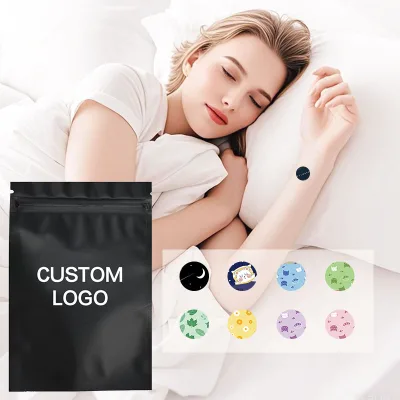
The price range observed in the market is between 0.05 and 1.5 USD per unit. This wide range reflects the complexity of the product. A basic patch with standard packaging and a simple ingredient profile will likely fall at the lower end of this spectrum. Conversely, patches with custom packaging, specialized shapes, or premium ingredients like high-purity Melatonin will command prices closer to the upper limit. The "Customized Package Accepted" and "Customized Logo Accept" options are significant cost drivers. Adding custom branding, specific color schemes (such as "Blue" or "White beige"), and unique packaging structures increases the unit cost due to setup fees and material changes.
Production capacity is another factor affecting cost and availability. Some suppliers list a "Max. Capacity" of 1,000,000 units, indicating they can handle large-scale orders. However, the lead time and capacity utilization can impact the final price. Buyers should negotiate based on their projected volume, understanding that higher volumes may secure better pricing but require a commitment to the supplier's MOQ. The "Selling Units" are listed as "Single item," which implies that pricing is typically calculated per piece, though bulk discounts are common for orders exceeding the MOQ.
Supplier Evaluation and Operational Capabilities
Evaluating a supplier for sleep support patches requires a holistic view of their operational capabilities, including OEM and ODM services. The market data confirms that "OEM & ODM" services are "Acceptable" and "Available" for many manufacturers. This flexibility allows buyers to create private label products or develop custom formulations. The ability to accept "Customized Logo" and "Customized Color" is a standard feature, but the quality of execution varies. Buyers should assess the supplier's portfolio to ensure they can meet aesthetic and branding requirements without compromising product integrity.
The "Packing" options also play a crucial role in supplier selection. Some suppliers offer "Individually Packing," which is ideal for retail presentation and hygiene, while others provide "Carton" packing for bulk shipping. The "Customized Packing" option allows for further differentiation. When evaluating a supplier, buyers should request samples to verify the quality of the individual packaging and the durability of the carton during transit. The "Single gross weight" and "Single package size" data provided by suppliers should be cross-referenced with actual samples to ensure accurate shipping cost calculations.
Furthermore, the "Usage" of the product, whether for "Personal usage" or "Daily Life Sleep," should align with the supplier's target market experience. Suppliers with experience in "Health Care" and "Immune Boosters" may have more rigorous quality control processes. Buyers should inquire about the supplier's production history and their ability to maintain consistency across batches. The "Model Number" variations, such as "HDSP2604" or "Dotdot-Sleep," indicate that suppliers have established product lines. Selecting a supplier with a proven track record in these specific models can reduce the risk of formulation errors.
Quality Control and Long-Term Procurement Strategy
Implementing a robust quality control (QC) strategy is essential for maintaining brand reputation in the sleep support market. Given the "Non-toxic" and "Eco-friendly" claims, buyers must establish a protocol for verifying these attributes. This includes requesting third-party test reports for heavy metals, microbial contamination, and ingredient purity. The "Shelf Life" of 2 to 3 years must be validated through stability testing to ensure the product remains effective and safe throughout its intended lifespan.
For long-term procurement, building a strategic partnership with a reliable supplier is more beneficial than transactional buying. The availability of "Customized Size" and "Shape" options suggests that the market is moving towards highly differentiated products. Buyers should work with suppliers who can scale their production capacity as demand grows, utilizing the "Max. Capacity" of 1,000,000 units as a benchmark for potential growth. Consistency in the "Main Ingredient," whether it is Vitamin C, Lavender, or Melatonin, is vital for customer trust. Any deviation in ingredient quality can lead to product failure and regulatory issues.
Finally, buyers should consider the "Feature" set of the product, such as "Non-toxic, healthy" and "Eco-friendly," as part of their marketing strategy. These features must be substantiated by the supplier's quality documentation. By maintaining a rigorous QC process and fostering a collaborative relationship with suppliers who offer flexible OEM/ODM services, buyers can ensure a steady supply of high-quality sleep support patches that meet both regulatory requirements and consumer expectations. The ability to customize packaging and branding while maintaining strict quality standards will be the key differentiator in a competitive B2B market.
FAQs
What are the main ingredients used in these sleep patches?
The main ingredients vary by product, including Vitamin C, Lavender, or Melatonin. Some listings specify herbal extracts while others highlight specific compounds for sleep aid or immune support.
Which certifications do these sleep patches typically hold?
Some products list ISO and CE as their quality certifications. Buyers should verify current certificates for specific models as these designations indicate adherence to international management and safety standards.
Can I customize the size and shape of the patches?
Yes, customized sizes and shapes are available for many models. Options include specific dimensions like 7.5 by 11 cm or fully tailored specifications to meet unique branding and application needs.
What is the typical minimum order quantity for these patches?
The minimum order quantity ranges from 100 pieces to 1000 boxes depending on the supplier and customization level. Standard items may have lower thresholds while branded orders often require higher volumes.
How long is the shelf life of these transdermal patches?
The shelf life is typically between 2 and 3 years depending on the formulation. This duration correlates with the stability of active ingredients like Melatonin or herbal extracts used in the patch.
Are OEM and ODM services available for these products?
OEM and ODM services are acceptable and available for many manufacturers. Suppliers can accommodate customized logos, colors, and packaging to support private label development and specific market requirements.
Where are these sleep patches typically manufactured?
The place of origin for many of these products is Hebei, China. This region is known for manufacturing wellness items including transdermal patches with varying formulations and packaging options.